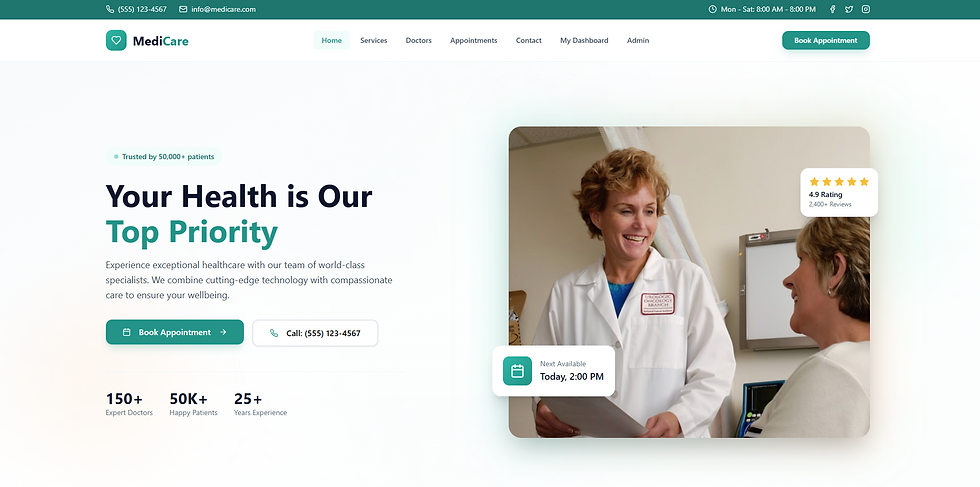
Modern Website Design Requirements for a Medical Center (MediCare)
1. User-Centered Design (UX)
A medical website must prioritize patient convenience and clarity.
Key requirements:
Simple and intuitive navigation
Clear call-to-action buttons (Book Appointment, Call Now)
Easy access to emergency contacts
Fast page load speed (under 3 seconds)
Mobile-first design
Accessibility for elderly and disabled users
Best practices
Large readable fonts
Minimal steps to book an appointment
Clear medical department navigation
Sticky header with contact information
2. Responsive & Mobile-First Design
Over 60–70% of patients visit healthcare sites from mobile devices.
Requirements:
Fully responsive layouts
Touch-friendly buttons
Optimized images
Mobile appointment booking
Click-to-call phone numbers
Devices to support:
Smartphones
Tablets
Desktop screens
Large monitors
3. Accessibility (ADA Compliance)
Healthcare websites must be accessible to all users.
Requirements include:
WCAG accessibility standards
Screen reader compatibility
High contrast color options
Keyboard navigation support
Alt text for all images
Captioned videos
Accessibility improves:
Legal compliance
Patient inclusivity
SEO performance
4. Trust & Credibility Elements
Healthcare decisions require high levels of trust.
Essential trust components:
Doctor profiles with credentials
Certifications and accreditations
Patient testimonials
Real photos of the facility
Medical licenses and partnerships
Security badges (SSL)
Important sections:
About the Medical Center
Meet Our Doctors
Patient Success Stories
Awards & Certifications
5. Online Appointment System
A modern healthcare site must include digital scheduling.
Features:
Real-time appointment booking
Doctor availability calendar
Department selection
Appointment reminders (SMS/email)
Reschedule or cancel options
Telehealth booking
Optional integrations:
Electronic Health Records (EHR)
Patient portal login
6. Services & Departments Structure
Patients must quickly find relevant services.
Common departments:
Cardiology
Neurology
Pediatrics
Orthopedics
Dermatology
Emergency Care
Diagnostic Services
Each department page should include:
Services offered
Doctor specialists
Treatment methods
FAQ
Book appointment button
7. Patient Portal
A secure patient portal improves engagement.
Features:
Medical records access
Test results
Prescription refills
Appointment history
Online consultations
Secure messaging with doctors
Security requirements:
HIPAA-compliant encryption
Secure login
Two-factor authentication
8. Search Engine Optimization (SEO)
Healthcare websites rely heavily on local search traffic.
Requirements:
Local SEO optimization
Structured medical schema markup
Fast loading pages
Blog with medical articles
Optimized service pages
Examples:
“Cardiologist near me”
“Urgent care in [city]”
“Pediatric clinic services”
9. Educational Content & Blog
A healthcare blog builds authority and patient trust.
Content types:
Medical articles
Preventive health tips
Treatment explanations
Video guides
Patient education materials
Benefits:
SEO traffic
Patient awareness
Brand authority
10. Security & Data Privacy
Healthcare websites handle sensitive data.
Security requirements:
SSL encryption
HIPAA compliance
Secure hosting
Protected forms
GDPR compliance (if international patients)
Additional protections:
CAPTCHA forms
Secure API connections
Regular vulnerability scans
11. Performance & Speed
Patients expect fast websites.
Requirements:
Page load under 3 seconds
Optimized images
CDN usage
Lazy loading
Efficient hosting infrastructure
12. Key Website Pages
A modern medical center website should include:
Core pages
Home
About Us
Departments
Doctors
Book Appointment
Patient Portal
Blog / Health Resources
Insurance Information
Contact Us
Additional useful pages
Emergency Services
Telemedicine
Pricing & Insurance
Careers
FAQs
13. Visual Design & Branding
Medical websites should communicate cleanliness, professionalism, and calmness.
Design elements:
Soft color palettes (blue, white, green)
Medical imagery
Clean layouts
Friendly typography
Minimalistic UI
Visual goals:
Reduce anxiety
Increase trust
Guide patient actions
14. Integration With Healthcare Systems
Modern medical websites integrate with hospital systems.
Possible integrations:
Electronic Health Records (EHR)
Insurance verification
Telemedicine platforms
Payment gateways
Lab systems
CRM for patient management
15. Analytics & Monitoring
Tracking helps improve patient experience.
Tools include:
User behavior tracking
Appointment conversion tracking
SEO performance analytics
Error monitoring
Patient journey analysis
Summary
A modern MediCare medical center website must combine:
Patient-friendly design
Strong security and compliance
Online appointment capabilities
Educational medical content
Trust-building doctor profiles
Mobile accessibility
Integration with healthcare systems
The ultimate goal is to make healthcare information and services easy, secure, and accessible for patients.